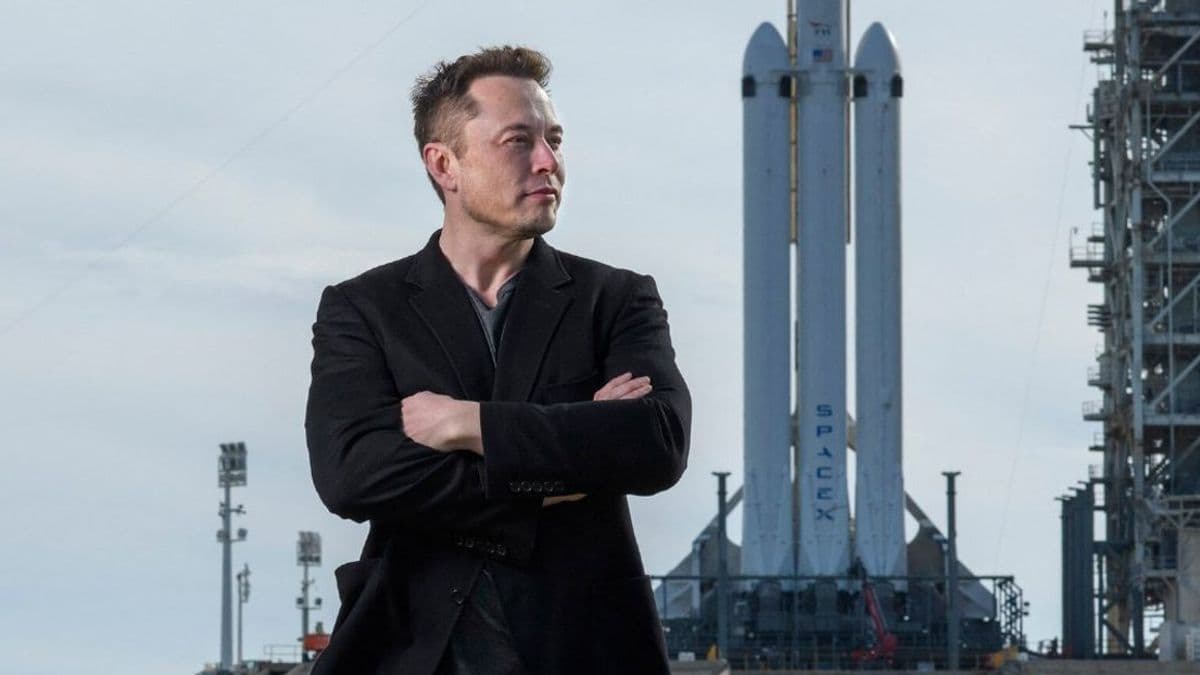
I saw a comment recently that went something like "Musk is basically just an influencer who shitposts on X all day."
Honestly? I used to think that too. The guy tweets like a teenager, picks fights with everyone, and drops some genuinely questionable takes on a regular basis. Not exactly the image of a serious businessman. But then I actually sat down and looked at what his companies are doing — not what he's posting, but what they're shipping — and my take changed. This might genuinely be the most important entrepreneur of our generation. And I don't say that lightly.
It's not about the money. Plenty of people have money. It's that the things he's pushing forward simultaneously would each be industry-defining on their own, and somehow they all feed into each other.
The Self-Driving War Is Basically Over
Let's start with autonomous driving. This battle has been going on for nearly a decade. Every player had their own recipe: LiDAR, HD maps, multi-sensor fusion — all sounded very sophisticated. But looking back from 2026, the pure vision approach won.
Tesla bet on vision-only from day one. No LiDAR, no HD maps, just cameras and neural networks. The entire industry said he was insane. Waymo used LiDAR. Baidu used LiDAR. Even Chinese EV makers like XPeng and Li Auto started with LiDAR. So what happened?
Waymo burned through tens of billions and still only operates in a handful of geofenced cities. Every expansion requires months of HD mapping with dedicated survey vehicles. It fundamentally doesn't scale.
Tesla? Millions of cars on the road globally, every single one a data collector. Every time FSD encounters a weird edge case, that data feeds back into training. Next model version, solved. This isn't some complex theory — it's basic logic: a fleet of a few hundred test cars versus a fleet of millions determines whether you can handle the long tail of real-world driving.
As of today, FSD V13's unassisted mileage numbers in North America are genuinely impressive. It's not perfect, but the improvement curve is exponential — each generation is an order of magnitude better than the last. Meanwhile, the companies still waiting for LiDAR prices to drop haven't even started spinning their data flywheel.
Why is pure vision right? Because humans drive with their eyes. If visual information is sufficient to solve driving — and the evidence says it is — then stacking extra sensors isn't solving the problem, it's taking a detour. Tesla saw that and went all in.
The Closed Loop Is What Makes Musk Truly Terrifying
But autonomous driving alone isn't the whole story. What really sets this guy apart is the full picture in his head.
Look at his companies: Tesla does cars and batteries. SolarCity does solar. Megapack does grid storage. SpaceX does rockets and Starlink. Neuralink does brain-computer interfaces. xAI does large language models. Boring Company digs tunnels. At first glance, it looks like he's chasing every shiny trend like a retail investor.
But think about it:
Energy loop: Solar panels generate power → Megapack stores it → charges Teslas. A complete clean energy chain with zero third-party dependency.
AI loop: Millions of Teslas collect real-world data → train self-driving models → model capabilities transfer to Optimus humanoid robots → Optimus works in factories, cutting manufacturing costs → build more cars and robots.
Compute loop: Custom Dojo supercomputer chips → optimized for video training → free from Nvidia's supply constraints and pricing → training costs keep dropping.
Space loop: Starship drives launch costs to the floor → Starlink provides global connectivity → Tesla fleet stays online and uploads data from anywhere on Earth.
See the pattern? These aren't parallel businesses. They're cross-feeding. Tesla's data feeds AI. AI capabilities power the robots. Robots lower factory costs. Lower costs mean more cars generating more data. Solar powers the charging network. Battery tech is shared between grid storage and vehicles. SpaceX's network keeps the fleet permanently connected.
What does this closed loop mean? He doesn't need any external supplier for his core cycle. Apple is impressive, sure. But Apple needs TSMC for chip fabrication and relies on Amazon and Google for cloud. What Musk is building is a system that controls everything from energy to compute to manufacturing to transportation.
This isn't science fiction. These companies are all operational, and most are either profitable or approaching profitability.
Why I Think He's Different from Every Other Tech Mogul
Silicon Valley doesn't lack smart people, rich people, or ambitious people. But what's the ambition of most tech leaders? Build a better ad system. Sell more cloud services. Get people to scroll ten more minutes of short videos. These things have commercial value, but let's be real — their impact on human civilization is approximately zero.
What Musk is working on — accelerating the energy transition, achieving autonomous driving, building reusable rockets, developing general-purpose robots — these are civilization-level infrastructure upgrades. Not optimization within existing frameworks. New frameworks entirely.
And he has a trait that's rare among entrepreneurs: he actually goes all in. During the 2008 financial crisis, both Tesla and SpaceX were on the brink. He poured his last dollar into them. Not sitting in an office letting the CFO decide — literally betting everything he had. You can call that reckless once. But when someone does it repeatedly, it's not recklessness. It's conviction.
You can dislike his personality. Find his tweets cringeworthy. Disagree with things he says. I get all of that. But if you look at what his companies have actually delivered — Falcon 9 is the most-launched rocket in history, Tesla is the world's most valuable automaker, FSD is becoming the first real-world L4 autonomy — it's hard to deny that this person is actually pushing humanity forward.
One Last Thing
I'm not writing this to defend Musk as a person. He's got plenty of flaws, his Twitter presence is baffling half the time, and I don't agree with everything he says. But I'm increasingly convinced that a person's public persona and what they're actually building can be two completely different things.
Twenty years from now, when we look back at this era's EV revolution, autonomous driving adoption, reusable rockets, and maybe even the dawn of humanoid robots — odds are, this name will be attached to all of it.
As for whether he's a "good person" — honestly, that doesn't matter much. History has never been written based on who was nice.